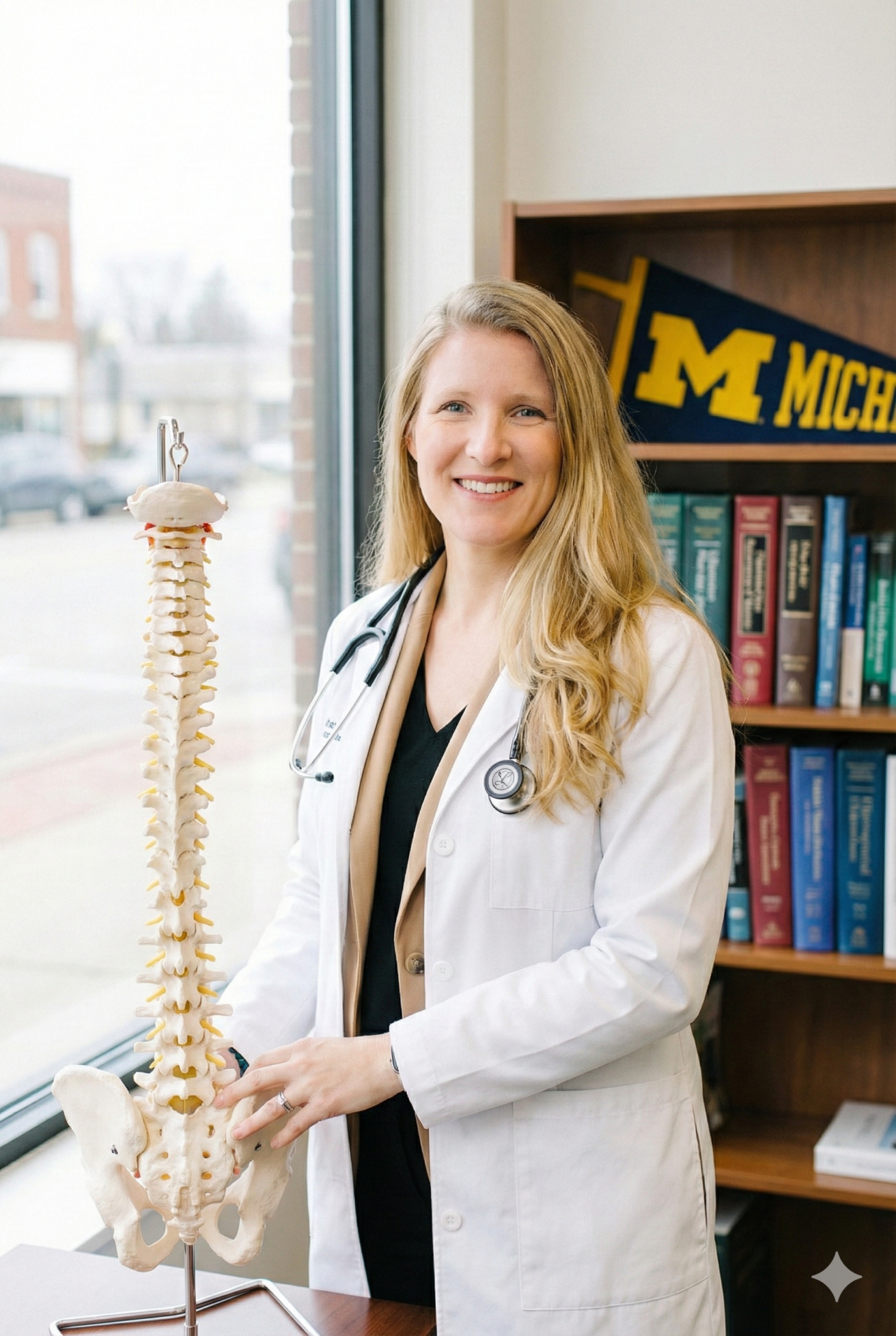


If grounding techniques help temporarily but you’re dysregulated again within the hour, the problem might not be your stress management skills. Your upper cervical spine (the top two bones in your neck) houses the vagus nerve, your body’s primary “calm down” pathway. When these bones are misaligned, they create neurological interference that prevents grounding techniques from working fully. Behavioral techniques address the symptoms. Structural alignment addresses the root cause.
Prefer to listen instead?
The Breaking Point You Don’t Talk About
You’ve done the box breathing. You’ve tried the 5-4-3-2-1 sensory technique. You’ve downloaded the meditation app, bought the weighted blanket, and read the books about nervous system regulation. You’re doing everything “right.”
And yet, you still feel like you’re vibrating out of your skin. You snap at your kids over things that shouldn’t matter. You feel disconnected from your own body. It’s like you’re watching yourself from the outside and you don’t recognize the person you’ve become. Your short fuse feels purely physical. Something inside you is constantly braced for impact and you can’t talk yourself down no matter how hard you try.
Here’s what nobody tells you. You’re not failing at stress management. Your nervous system isn’t broken. But there might be a structural roadblock preventing all those grounding techniques from actually working.
“I was doing everything the parenting books said. Breathing exercises, mindfulness, self-care. But nothing stuck. It was like the relief would evaporate the moment I started my next task.”
The “Grounded But Still Shaking” Trap
This is the trap thousands of overwhelmed moms fall into. You believe your nervous system dysregulation is purely a stress management problem. So you keep adding more behavioral interventions. More breathing exercises. More meditation. More positive self-talk.
But if there’s structural interference in your upper cervical spine (the top of your neck), those techniques are like trying to reset your Wi-Fi router while the cable is unplugged. The techniques aren’t wrong. The hardware is compromised.
Whether you’re juggling errands at the Grand Ledge Meijer or heading to a co-op meeting in Delta Township, that feeling of “vibrating” follows you everywhere.
I’m Dr. Andrea Herrst, a chiropractor in Grand Ledge, Michigan. I teach human physiology to healthcare students at Lansing Community College. I see this pattern constantly in my practice. It happens especially with homeschool moms who are doing everything “right” but still feel like they’re barely holding it together.
Why Your Grounding Techniques Only Work for 30 Minutes
Think of your nervous system like a two-way radio. When you practice grounding techniques (deep breathing, cold water on your face, sensory exercises), you’re talking into the microphone. You’re saying “calm down, calm down, calm down.”
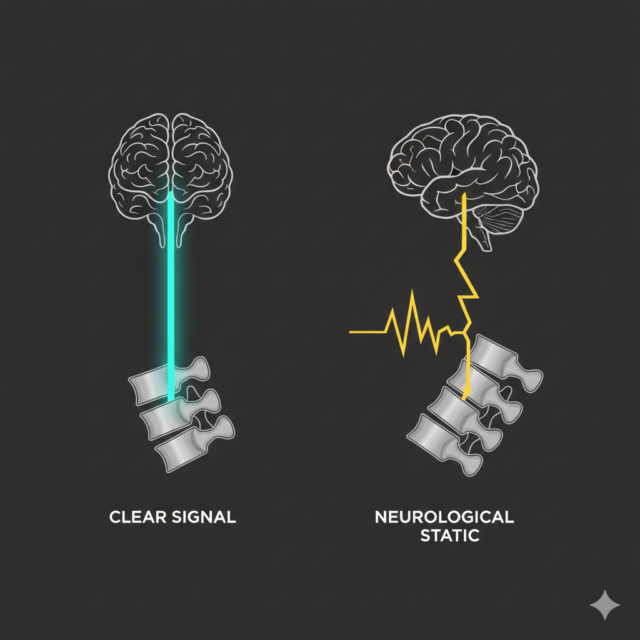
But if there’s static on the line, your brain can’t hear the message clearly.
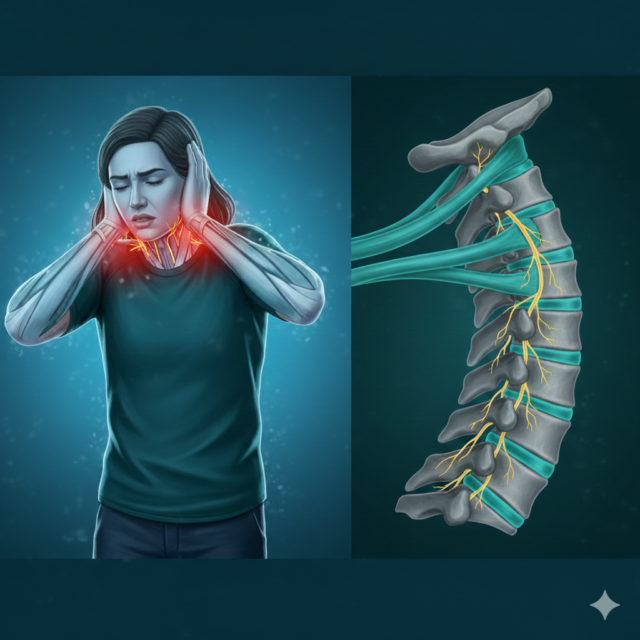
That static? It’s often coming from your upper cervical spine. That’s the top two bones in your neck. They’re called C1 and C2. This is where the vagus nerve (your body’s primary “calm down” nerve) exits your skull and travels down through your body.
When C1 or C2 are misaligned, even slightly, they create what I call “neurological static.” It’s like putting a kink in a garden hose. The water (or in this case, the calming signal) can’t flow properly. Your grounding techniques work temporarily because you’re shouting louder into the microphone. But the static remains. So you dysregulate again within the hour.
The Physiology You Need to Know
My training at University of Western States{:target=”_blank”} emphasized understanding the nervous system at a doctoral level. Not just spinal mechanics. And when I teach physiology to future healthcare providers, I focus heavily on the connection between structure and function.
Here’s the simplified version:
Your vagus nerve is the longest cranial nerve in your body{:target=”_blank”}. It starts in your brainstem. It exits through a small opening at the base of your skull. Then it travels down through your neck, chest, and abdomen. Along the way, it regulates your heart rate, breathing, digestion, and your ability to shift from “fight or flight” mode back to “rest and digest” mode{:target=”_blank”}.
The C1 and C2 vertebrae form a protective gateway. The vagus nerve passes through this gateway. When these bones are properly aligned, the nerve has plenty of space to transmit signals cleanly. But when they’re misaligned, they create compression or irritation.
The misalignment can come from old injuries, poor posture, repetitive stress, or even the physical demands of carrying kids and looking down at curriculum all day.
This doesn’t always cause pain. Sometimes the only symptom is that your nervous system won’t reset properly. No matter how many grounding techniques you try.
The 5+1 Nervous System Reset Protocol
Most content about nervous system dysregulation gives you either behavioral techniques OR talks about structural care. But that’s like having a car with both a dead battery and flat tires. You can’t fix just one and expect the car to run.
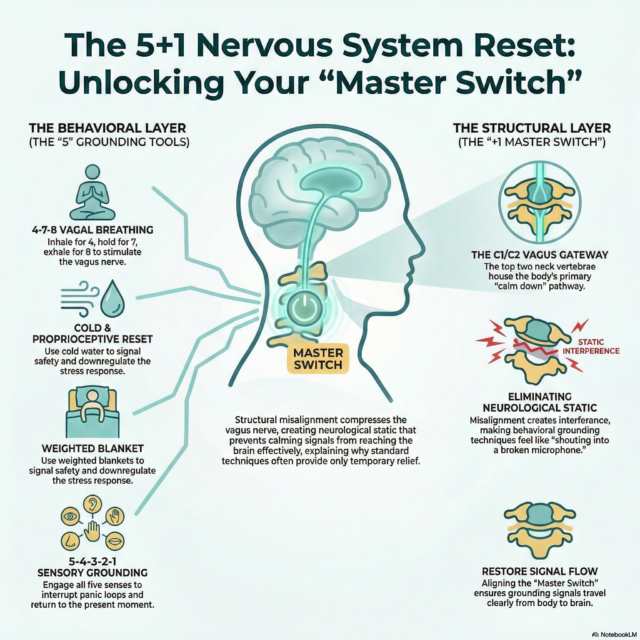
The 5+1 Protocol integrates both layers:
The Behavioral Layer (Techniques 1-5): Grounding exercises that send the “calm down” signal
The Structural Layer (The +1 Master Switch): Ensuring the pathway is clear so those signals actually reach your brain
Both matter. But if you only do techniques 1-5 without addressing the +1, you’ll stay stuck in the “grounded but still shaking” trap.
The 5 Grounding Techniques (Behavioral Layer)
Technique 1: Vagal Breathing (4-7-8 Pattern)
Breathe in through your nose for 4 counts. Hold for 7 counts. Exhale through your mouth for 8 counts. This activates your parasympathetic nervous system. That’s the “brakes” on your stress response. The extended exhale is key because it stimulates the vagus nerve directly.
Why it works: The vagus nerve connects to your diaphragm. Slow, deep breathing sends a mechanical signal that you’re safe.
Technique 2: Cold Exposure (Mammalian Dive Reflex)
Splash cold water on your face. Hold ice cubes. Or take a cold shower. The shock of cold activates the trigeminal nerve in your face. This nerve talks directly to the vagus nerve.
Why it works: Your body interprets the cold as a signal to conserve energy. This automatically downregulates your sympathetic (“fight or flight”) response.
Technique 3: Proprioceptive Input (Heavy Pressure)
Use a weighted blanket. Do wall push-ups. Or engage in bilateral tapping (alternating pressure on your knees). This activates sensory pathways that help your brain “locate” your body in space.
Why it works: When you’re dysregulated, your brain often loses track of where your body is. Proprioceptive input reestablishes that connection.
Technique 4: 5-4-3-2-1 Sensory Grounding
Name 5 things you can see. 4 things you can touch. 3 things you can hear. 2 things you can smell. 1 thing you can taste. This forces your cortex (thinking brain) to override your limbic system (panic brain).
Why it works: Grounding techniques interrupt rumination loops{:target=”_blank”} and bring you into the present moment through concrete sensory data.
Technique 5: Progressive Muscle Relaxation
Systematically tense and release muscle groups from your toes to your head. Hold the tension for 5 seconds. Then release for 10 seconds.
Why it works: When you’re chronically stressed, your muscles hold a “braced for impact” pattern. Deliberate release teaches your nervous system it’s safe to let go.
These five techniques are evidence-based and effective. But if you notice they only work for 20-30 minutes before you’re dysregulated again, that’s a sign the structural layer needs attention.
What Your Body Is Actually Telling You
When you’re dysregulated, your body sends signals. But most people misinterpret what those signals mean. Here’s what your nervous system is actually trying to tell you:
|
What You Feel (The Symptom) |
What You Think It Means |
What It Actually Means (The Reality) |
The Hidden Cost |
|
Racing thoughts that won’t stop |
“I need to meditate more” |
Your sympathetic nervous system is stuck in “scan for threats” mode. This often happens because C1/C2 misalignment is disrupting vagal brake function |
You’re burning through cortisol reserves. This depletes your ability to respond to actual stress |
|
Short fuse with your kids |
“I’m a bad mom” |
Your limbic system (emotional brain) is in hypervigilance. Your brain can’t confirm your body is safe due to disrupted proprioceptive feedback from your neck |
Shame spiral that increases stress hormones. This makes dysregulation worse |
|
Can’t fall asleep even when exhausted |
“I need better sleep hygiene” |
Your body can’t shift from sympathetic (alert) to parasympathetic (rest). The vagus nerve pathway is compromised |
Chronic sleep debt compounds nervous system dysfunction. This creates a downward spiral |
|
Digestive issues (nausea, IBS symptoms) |
“I need to change my diet” |
80% of your gut’s nerve supply comes from the vagus nerve. Upper cervical misalignment directly affects digestive function |
You avoid foods that aren’t actually the problem while the structural issue remains |
|
Feel disconnected from your body |
“I’m dissociating from stress” |
Your brain is receiving conflicting signals about where your head is in space (proprioceptive dysfunction from C1/C2). So it “disconnects” to avoid the confusion |
Decision-making becomes harder. Your brain is using processing power just to figure out your body’s position |
Why This Matters:
Your brain is constantly asking “Am I safe?” It answers that question by checking signals from your body. Heart rate. Breathing. Muscle tension. Joint position. When your upper cervical spine sends noisy or conflicting data, your brain defaults to “not safe.” This happens regardless of your actual circumstances. This is why positive thinking and grounding techniques alone don’t fix the problem when there’s structural interference.
Quick Answer for Voice Search: Why Isn’t My Grounding Working?
Grounding techniques often fail because of upper cervical misalignment. If the vagus nerve is compressed in the neck, the brain cannot receive the “calm down” signal clearly. The techniques aren’t wrong. The physical pathway is blocked.
The +1 Master Switch (Structural Layer)
Here’s where my training as a functional neurological chiropractor comes in.
All five grounding techniques rely on the vagus nerve’s ability to transmit signals from your body to your brain. But the vagus nerve passes through a very small space between your C1 and C2 vertebrae. When these bones are misaligned, they create compression or irritation that disrupts signal transmission.
Think of it like this: Techniques 1-5 are you turning up the volume on the “calm down” message. The +1 Master Switch makes sure the speaker isn’t broken.
What causes C1/C2 misalignment?
- Old injuries (car accidents, falls, sports injuries, even difficult births)
- Repetitive stress (looking down at phones, computers, curriculum)
- Physical demands (carrying kids, lifting, awkward sleeping positions)
- Chronic tension (clenching jaw, holding shoulders up near ears)
How do you know if this applies to you?
Most people don’t. C1/C2 misalignment doesn’t always cause neck pain. Sometimes the only symptom is neurological. Anxiety that won’t respond to therapy. Digestive issues. Difficulty regulating emotions. Or the “vibrating” feeling that won’t go away.
That’s why a structural evaluation is critical. In my Grand Ledge practice, I use specific upper cervical alignment assessments to evaluate how your nervous system is functioning.
Why Michigan Winters Make Everything Worse (The Metabolic Bracing Effect)
If you’ve noticed your symptoms getting worse this winter, you’re not imagining it. There’s actual physics at play.
When temperatures drop and your heating bill climbs (as many families in the greater Lansing area have experienced this year), your body enters what physiologists call “metabolic conservation mode.” This isn’t conscious. It’s a survival mechanism hardwired into your nervous system.
Here’s what happens:
When you’re cold, your body contracts the small muscles at the base of your skull. These are called the suboccipital muscles. They contract to reduce surface area and conserve heat. This is why you “hunch” when it’s freezing. These same muscles attach directly to the C1 and C2 vertebrae.
When the wind whips across the fields in Potterville or through the Fitzgerald Park trails, your body’s natural response is to “hunker down.” Sustained cold exposure creates sustained muscle contraction. This creates a constant mechanical pull on your upper cervical spine. Over weeks or months, this pull can shift C1 or C2 out of alignment. Even if you’ve never had an injury.
Add to this the physical stress of:
- Tensing your shoulders while scraping ice off your car
- Carrying groceries from your car to your house while shivering
- Sleeping with your shoulders hunched under heavy blankets
- The general “bracing” posture people hold in winter
Your upper cervical spine is under siege from October through March.
The Vicious Cycle:
Cold weather → Muscle bracing → C1/C2 misalignment → Vagus nerve compression → Nervous system can’t downregulate → Chronic stress response → MORE muscle tension → Worse misalignment
This is why you might notice you can “handle” stress better in summer than winter. It’s not just seasonal affective disorder. It’s actual mechanical stress on your nervous system’s primary reset pathway.
The Economic Stress Connection:
When those February utility bills hit mailboxes in Grand Ledge or DeWitt, your body doesn’t just feel “worried.” It physically braces. When your utility bill spikes and financial stress increases muscle tension, your body produces more cortisol. That’s your stress hormone. Cortisol increases muscle tension. More tension means more pull on C1/C2. The stress about the bill literally makes the structural problem worse.
That bracing is a metabolic tax that pulls directly on your C1 vertebrae. The number on the page becomes tension in your shoulders. That becomes misalignment in your neck. That becomes a nervous system that can’t reset properly.
Clinical Observation (Grand Ledge/Lansing Specific):
In my practice, I see a spike in nervous system dysregulation complaints from January through March. These are often patients who were managing fine through fall. But the cumulative effect of a Michigan winter finally tipped them into chronic dysregulation.
The Clinical Pattern I See Every Week
As someone who teaches physiology and works with patients daily, I see a clear pattern. The moms who come to me exhausted from trying every stress management technique often have one thing in common. Upper cervical misalignment that predates their current stress.
Maybe it was a car accident in college. Maybe it was a fall from a horse as a kid. Maybe it was years of poor posture that finally caught up. The precipitating event varies. But the result is the same. A nervous system that can’t downregulate properly because the physical pathway is compromised.
When we address both layers (behavioral grounding techniques PLUS structural alignment), the results are different. The grounding techniques start working consistently instead of temporarily. The “reset” actually sticks.
Many of the families I work with in the greater Lansing area are homeschoolers. This means they’re essentially running a small school while managing a household. The physical and emotional demands are immense. When your nervous system can’t reset, you can’t sustain that level of output without burning out.
The “Second Shift” Pattern: A Case Study
The Scenario (Anonymized):
A mom from the greater Lansing area came to my Grand Ledge office in early March. She homeschools two kids (ages 7 and 10). During the day, she’s “Teacher Mom.” Lesson plans. Hands-on activities. Managing two different grade levels. At night, she shifts to “Admin Mom.” Household finances. Meal planning. Coordinating activities.
Tax season had just ramped up. Between organizing receipts, tracking deductions, and the general stress of “did we miss something that will cost us later,” she was spending her evenings hunched over her laptop.
She told me: “I’m doing all the breathing exercises. I’m trying to stay calm. But by dinner time, I’m a completely different person. I snap at my husband over nothing. I feel like I’m watching myself be mean and I can’t stop it.”
The Diagnostic Finding:
Her C1 vertebra was rotated to the right. This likely came from an old car accident in college (15 years ago). It had never caused significant pain. So she’d never addressed it. But the combination of:
- Looking down at curriculum all day (forward head posture)
- Hunching over laptop at night (more forward head posture)
- Chronic stress from tax season (increased muscle tension)
- The physical bracing from Michigan’s cold winter
…had turned a subtle misalignment into active nervous system dysfunction.
The Result:
After addressing the structural component (C1 alignment) AND teaching her modified versions of grounding techniques that worked WITH her nervous system instead of fighting against structural interference, she reported: “It’s like the volume got turned down on everything. I can still feel stress, but it doesn’t hijack me anymore.”
The grounding techniques she’d been doing for months finally started working consistently. Because the structural roadblock was removed.
Mom-to-Mom Tip: For the Homeschool Science Lesson
If you’re teaching anatomy this week, the vagus nerve is the perfect “Master Switch” example for your kids. When you understand how it works, it changes how your whole family talks about “feeling stressed” versus “feeling dysregulated.”
Try this: Show them where C1 and C2 are on their own necks (right at the base of the skull). Explain that this tiny space is where one of the most important nerves in their body passes through. It’s like the control room for calming down.
Then practice the 4-7-8 breathing together and talk about what’s happening in their bodies. You’re not just teaching anatomy. You’re giving them tools to understand their own nervous systems.
Why Evidence-Based Training Matters for Your Nervous System
Two Approaches to the Same Problem:
Traditional Chiropractic Model (Palmer/Life Philosophy):
- “Where does it hurt?” → Adjust that area
- Focus: Pain relief through spinal manipulation
- Philosophy: Subluxation (misalignment) causes disease
- Evaluation: Primarily palpation (feeling for tight muscles)
- Goal: Restore mobility, reduce pain
Evidence-Based Functional Neurology Model (Western States):
- “Where is the signal breaking down?” → Comprehensive neurological assessment
- Focus: Restore proper nervous system communication
- Philosophy: Structure affects function. Function affects quality of life
- Evaluation: Neurological testing, proprioceptive assessment, vagal tone measurement, movement analysis
- Goal: Optimize nervous system regulation (which often eliminates pain as a side effect)
The Difference in Practice:
When you come to me with “stress and neck pain,” I’m not just asking where it hurts. I’m asking:
- How is your sleep quality?
- How’s your digestion?
- Do you startle easily?
- How long do grounding techniques work before you’re dysregulated again?
- Do you have a history of head or neck injury?
- What’s your emotional resilience like compared to a year ago?
These aren’t small talk. These are diagnostic questions about your autonomic nervous system function.
Why I Can Teach Physiology:
My training at University of Western States wasn’t just about adjustment technique. It was about understanding the nervous system at a doctoral level. The same rigor I use to teach future nurses and healthcare providers at Lansing Community College is what I bring to patient care.
I’m not guessing about whether your vagus nerve is involved. I’m testing for it. That’s the Western States difference.
Physiology Corner: The Jugular Foramen (For the Detail-Oriented)
For those who want to know exactly what I teach my LCC students, here is the deep dive into the anatomy.
This section is for readers who want to understand the actual anatomy. If you’re already overwhelmed, skip to the next section.
The vagus nerve (cranial nerve X) exits your skull through a small opening called the jugular foramen. This opening is formed by two bones: the temporal bone (part of your skull) and the occipital bone (base of your skull).
Right next to this opening is where your C1 vertebra (atlas) sits. The C1 doesn’t just support your head’s weight (10-12 pounds). It also houses the vertebral artery and sits in direct proximity to multiple cranial nerve pathways.
When C1 rotates or tilts even a few millimeters, it can create tension on the dural sleeve (protective covering) around these nerves. This doesn’t cut off the nerve (that would cause paralysis). It creates what we call “mechanical irritation” or “neurological noise.”
Think of it like this: the nerve signal still gets through, but it’s like trying to have a phone conversation with static on the line. Your brain receives the vagal “calm down” signal, but it’s garbled. So your brain keeps your body in “alert” mode just to be safe.
This is why precise upper cervical work matters. We’re not moving bones because they’re “out of place.” We’re removing mechanical interference from critical neurological pathways.
Why I Know This: This is the level of detail I teach in my physiology courses at LCC. Understanding anatomy at this level allows me to be precise in my approach.
The 3-Minute Dysregulation Self-Assessment
Answer yes or no to each question:
|
Question |
Your Answer |
|
Do grounding techniques help temporarily (under an hour) but then you’re dysregulated again? |
Y / N |
|
Do you feel a “short fuse” that seems purely physical, like your body is constantly braced? |
Y / N |
|
Do you clench your jaw or grind your teeth (even during the day)? |
Y / N |
|
Do you have tension or stiffness that’s worse on one side of your neck? |
Y / N |
|
Do you have unexplained headaches that start at the base of your skull? |
Y / N |
|
Does turning your head all the way to one side feel restricted or uncomfortable? |
Y / N |
|
Do you startle easily or feel jumpy even in safe environments? |
Y / N |
|
Do you have digestive issues that don’t respond to dietary changes? |
Y / N |
|
Have you had a previous injury to your head or neck (car accident, fall, sports injury)? |
Y / N |
|
Do you feel “disconnected” from your body, like you’re watching yourself from outside? |
Y / N |
Scoring:
- 0-2 Yes: Your dysregulation is likely primarily behavioral. Focus on techniques 1-5.
- 3-5 Yes: There’s likely a structural component interfering. Both layers need attention.
- 6+ Yes: Strong indication of upper cervical involvement. Evaluation recommended.
Important Note: This is a screening tool, not a diagnosis. Only a thorough evaluation can determine the actual cause.
When Grounding Isn’t Enough
If you scored 3 or higher on the self-assessment, here’s what that means:
You’re not failing at stress management. You’re not weak. You’re not broken. Your nervous system is trying its best to regulate. But there’s a structural roadblock preventing full communication between your body and brain.
The good news? This is addressable.
Unlike behavioral interventions that require constant maintenance, structural correction (when done properly) creates lasting change. Once C1/C2 alignment is restored and neurological interference is removed, your grounding techniques start working the way they’re supposed to. The reset sticks instead of lasting just 30 minutes.
You stop feeling like you’re fighting your own body every day.
The Nervous System Dysregulation Evaluation
In my Grand Ledge office, I offer a comprehensive Nervous System Dysregulation Evaluation. This assessment looks at both the behavioral patterns and the structural components. This includes:
- Upper cervical alignment analysis
- Neurological function testing
- Vagus nerve response assessment
- Movement pattern evaluation
- Customized protocol combining behavioral techniques with structural correction
I work with families throughout the greater Lansing area. Providing functional neurology for families in West Lansing and Delta Township. Serving families from the quiet streets of Grand Ledge to the bustling neighborhoods of West Lansing and the surrounding Potterville community with evidence-based chiropractic care. Many of my patients are homeschool moms who need their nervous systems to function optimally. Because “taking a break” isn’t an option when you’re running a household and a school simultaneously.
Hear what other local families have experienced after addressing both the behavioral and structural layers of nervous system dysregulation.
Free Resource: The 5+1 Grounding Tracker
To help you identify which techniques work best for your nervous system, I’ve created a free downloadable tracker. It walks you through each of the 5 behavioral techniques. Plus it helps you assess whether structural evaluation might be beneficial.
The tracker includes:
- Daily grounding technique log
- “How long did the relief last?” tracking
- Physical symptom checklist
- When to seek structural evaluation guide
Download the free 5+1 Grounding Tracker here
This gives you a concrete tool to use while you’re deciding whether a comprehensive evaluation is right for you.
What to Expect
This isn’t a “crack and go” adjustment. Functional neurological chiropractic focuses on restoring proper communication between your nervous system and your body. The goal isn’t just pain relief (though that often happens). The goal is nervous system regulation.
Most patients notice changes in their stress response, sleep quality, and emotional resilience within the first few sessions. The grounding techniques they were already doing start working better. Because the structural interference has been removed.
Fair Warning:
If you’re looking for a quick fix, this isn’t it. Nervous system regulation requires both your commitment to behavioral practices and our work together on structural alignment. But if you’re ready to stop fighting your own body, let’s talk.
Schedule Your Nervous System Evaluation in Grand Ledge
About Dr. Andrea Herrst, DC
Dr. Herrst is a chiropractor in Grand Ledge, Michigan, serving families throughout the greater Lansing area. She graduated from University of Western States with specialized training in functional neurology and evidence-based chiropractic care. In addition to her clinical practice, Dr. Herrst teaches human physiology at Lansing Community College. She brings doctoral-level nervous system expertise to both her students and her patients.
Learn more about Dr. Herrst | Contact the practice