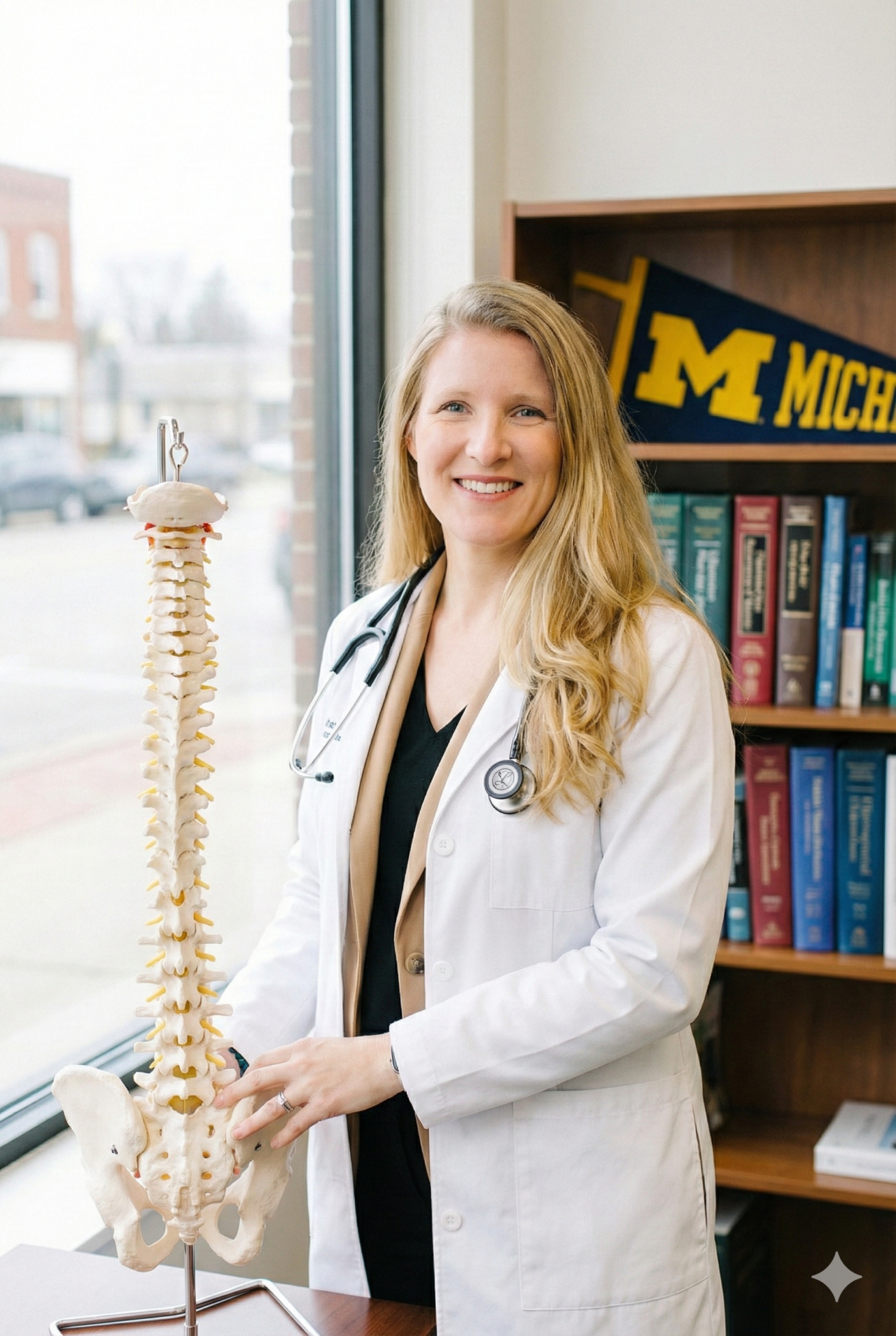


Winter fatigue isn’t just “how February feels in Michigan.” It’s a perfect storm of vitamin D deficiency, reduced circulation, and nervous system stress that makes you exhausted despite sleeping more. Your cold hands, brain fog, and short patience with the kids are symptoms of nervous system communication breakdown. Dr. Herrst’s whole-person chiropractic approach addresses the root cause, not just the symptoms.
Prefer to listen instead?
You’re Not Imagining It
You’re in bed by 9pm now instead of 10:30. You hit snooze three times this morning when you used to bounce up at 6am. Your hands are cold even inside the house, and you’ve had two extra cups of coffee before lunch, but it’s not touching the exhaustion.
The heaviness in the morning feels like you’re moving through mud. Your body aches but you can’t point to a specific injury. The cold settles into your hands and feet and won’t leave no matter how many layers you add.
You thought about taking the kids for a nature walk at Fitzgerald Park or along the Ledges trails for science class, but the idea of bundling everyone up and dealing with the 15-degree wind makes you want to cry. The Grand Ledge District Library is doing their winter reading program, but you’re too exhausted to even consider it. Whether you’re homeschooling in DeWitt, running errands in Delta Township, or just trying to make it through the day in Wacousta, this Michigan winter doesn’t discriminate.
The brain fog makes you read the same paragraph in the homeschool lesson three times. You’re sleeping nine hours but waking up feeling like you pulled an all-nighter.
Then there’s the patience thing. You snapped at the kids over something small this morning. Again. You feel guilty because you know they’re just being kids, but your fuse is so short lately.
Here’s what you need to hear: this isn’t a character flaw. You’re not a bad mom. You’re not weak. You’re not failing at homeschooling. You’re a human being whose nervous system is under siege from multiple stressors at once, and your body is responding exactly the way it’s designed to respond. The problem isn’t you. The problem is that nobody’s helping you see what’s actually happening.
You’re doing everything “right.” You’re eating relatively well. You’re getting more sleep than usual. You’re not sick. But you feel worse than you did in November. And you can’t quite figure out why, which makes it even more frustrating.
What if I told you this isn’t about doing more things right? What if the problem is that you’re looking at this through the wrong lens entirely? You can’t fix what you can’t see. And right now, you’re trying to solve a nervous system problem with lifestyle adjustments. That’s like trying to fix your internet connection by refreshing the browser harder.
Here’s What’s Actually Happening in Your Body
Here’s what most people don’t realize about winter fatigue symptoms: it’s not just one thing. It’s a perfect storm of factors that all hit at once, and they all connect back to one system in your body that controls everything else.
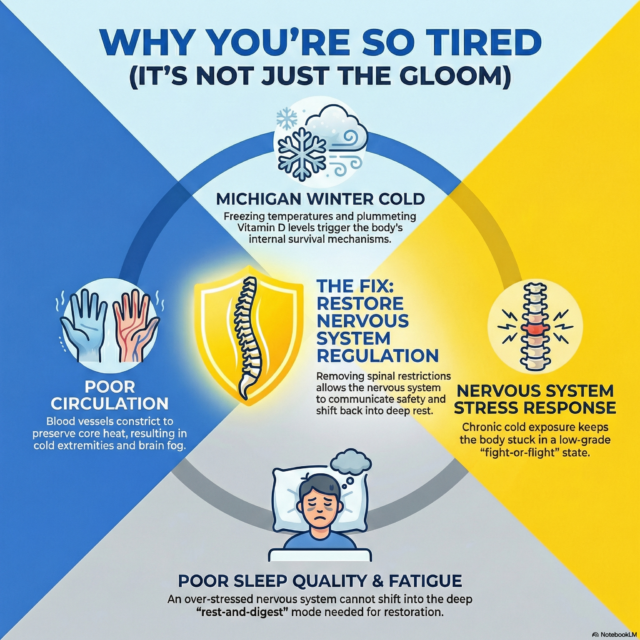
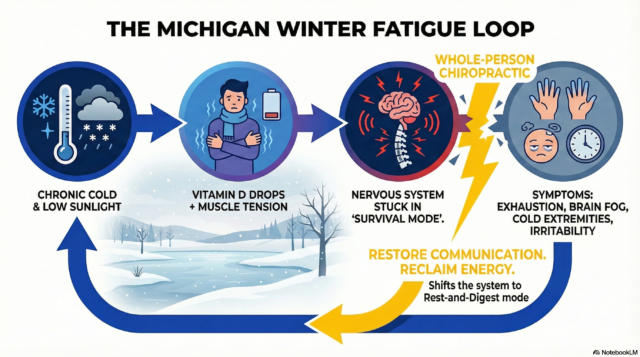
When the temperature drops and stays below freezing for weeks (like it has been in Grand Ledge this winter), multiple things happen simultaneously. Your vitamin D levels plummet because you’re not getting sunlight exposure. Your body constricts blood vessels to preserve core temperature, which means less circulation to your hands, feet, and brain. Your nervous system goes into a low-grade stress response trying to regulate all of this. And that nervous system stress affects your sleep quality, your mood, your patience, and your energy levels.
Most conventional approaches treat these as separate issues. Take vitamin D supplements for the deficiency. Drink more water for the fatigue. Try therapy for the irritability. But here’s what gets missed: your nervous system controls all of these functions.
As an Adjunct Instructor of Human Physiology at Lansing Community College, I teach my students about the autonomic nervous system’s role in regulating every function in your body. Temperature control, circulation, sleep cycles, mood regulation, digestion, energy production – all of it runs through your nervous system. When your spine isn’t moving properly (which happens when you’re tensing against the cold, hunching at the homeschool table for hours, and moving less overall), your nervous system can’t communicate effectively with the rest of your body.
That’s why you can sleep nine hours and still feel exhausted. That’s why your hands stay cold even inside. That’s why your patience is shorter than normal. Your body isn’t broken, it’s just not communicating properly. And that’s exactly what whole-person chiropractic care addresses.
PHYSIOLOGY TEACHER’S CORNER: FROM THE CLASSROOM TO THE CLINIC
In my Human Physiology classes at LCC, I teach students that the autonomic nervous system has two modes: sympathetic (fight-or-flight) and parasympathetic (rest-and-digest). Your body should shift between these modes naturally throughout the day.
But here’s what happens in Michigan winters: chronic cold exposure keeps you in low-grade sympathetic mode. Your blood vessels stay constricted (cold hands and feet). Your sleep stays shallow (sympathetic doesn’t allow deep parasympathetic rest). Your patience stays short (sympathetic is survival mode, not nurturing mode).
The textbook calls this “autonomic imbalance.” Research published in the Journal of Physiology demonstrates how spinal manipulation can improve autonomic nervous system regulation and heart rate variability. In my practice, I see it as your nervous system doing exactly what it’s designed to do – but getting stuck there because spinal restrictions prevent the shift back to parasympathetic mode. That’s the piece most conventional medicine misses.
The Winter Fatigue Connection: What’s Really Going On
Let’s break down what’s actually happening in your body right now, and more importantly, what you can do about it. Understanding the connections helps you make better decisions about your health instead of just trying random solutions and hoping something works.
Vitamin D Deficiency and Nervous System Regulation
Vitamin D isn’t just about bone health. It’s a critical component in how your nervous system functions, how your brain produces neurotransmitters (the chemicals that regulate mood and energy), and how your immune system responds to stress. In Michigan, from November through March, you can’t get enough vitamin D from sunlight even if you’re outside every day. Your body is running on reserves, and by February, those reserves are typically depleted.
This vitamin D deficiency and fatigue connection directly impacts how your nervous system communicates with the rest of your body. According to research from the National Institutes of Health, vitamin D deficiency is particularly common in northern latitudes during winter months, affecting up to 40% of adults in states like Michigan. It affects your sleep-wake cycle, which is why you can sleep nine hours and still feel exhausted. Your body is in sleep mode, but it’s not quality, restorative sleep because your nervous system isn’t cycling through the proper stages.
Here’s what helps, and notice I’m giving you options so you can decide what makes sense for your situation: quality vitamin D3 supplementation (I can recommend appropriate dosing based on your specific needs during your consultation), getting outside even for 10 minutes on sunny days (yes, even in February), and addressing the nervous system interference that’s preventing your body from using the vitamin D you do take in. That last part is what most conventional approaches miss entirely, and it’s where chiropractic care makes the biggest difference.
The Circulation Problem: Why Your Hands and Feet Are Always Cold
When your hands and feet are constantly cold, that’s not just uncomfortable. It’s a sign that your nervous system is prioritizing core temperature over peripheral circulation. This happens as a survival mechanism, but when you’re not actually in danger (you’re just in a Michigan winter), it creates problems.
Poor circulation means less oxygen to your brain (hello, brain fog), less nutrient delivery to your muscles (hello, body aches and muscle tension), and a constant low-grade stress signal to your nervous system (hello, irritability).
I explain to my physiology students that your blood vessels don’t just constrict and dilate randomly. They’re controlled by nerves coming from your spine. When those spinal segments aren’t moving properly, the nerve signals get disrupted. This is one of the nervous system fatigue symptoms that people don’t realize is connected to spinal health.
Improving circulation in hands and feet through chiropractic adjustments helps restore proper nerve communication to your blood vessels, allowing them to dilate and constrict appropriately instead of staying in constant constriction mode. This is why many patients notice their hands and feet warm up after starting chiropractic care, even when the outside temperature hasn’t changed.
The Sleep Paradox: Why Am I Still Tired After 9 Hours of Sleep?
You’re sleeping more hours but feeling more tired. This seems backwards until you understand that your nervous system controls your sleep quality, not just sleep quantity. When your spine has areas of restricted movement (called subluxations), your nervous system can’t shift properly into parasympathetic (rest and digest) mode. You’re in bed for nine hours, but your nervous system is stuck in a semi-alert state the entire time.
This is especially common in winter when you’re tensing against the cold, hunching over the homeschool table for hours, and moving your body less overall. Those movement patterns create restrictions in your spine that interfere with nervous system function. Addressing these restrictions through gentle, specific chiropractic adjustments allows your nervous system to actually rest when you sleep, which means you wake up feeling restored instead of exhausted.
“Your short patience with the kids isn’t a character flaw. It’s your nervous system stuck in survival mode because your spine can’t communicate that you’re safe and warm.”
Whole-Person Approach vs. Band-Aid Solutions
Most conventional approaches treat each symptom separately. Sleeping pill for the sleep. Stimulant for the energy. Antidepressant for the mood. But when the root cause is nervous system interference from spinal restrictions, adding more chemicals doesn’t restore function. It just masks the symptoms.
My whole-person approach isn’t about making you dependent on me. It’s about helping you become someone who understands how your body works so you can make informed decisions. How is your spine moving? Where are the restrictions? How is that affecting your nervous system communication? What lifestyle factors (vitamin D, hydration, movement, stress) are supporting or undermining your body’s ability to heal?
Then we create a plan that addresses your specific needs, not a cookie-cutter protocol that treats everyone the same. My goal is to help you understand your body well enough that you can navigate future winters with confidence.
HOMESCHOOL MOM LIFE-HACK: FEBRUARY SURVIVAL TIP
Move your lessons to the brightest room in your house between 10:00 AM and 2:00 PM. Even 15 minutes of indirect natural light helps reset your nervous system’s circadian rhythm and boosts whatever vitamin D production is possible in Michigan winter.
Bonus: If you’re doing read-aloud time, sit near a south-facing window. Your body absorbs light through your eyes and skin, even through glass. It’s not a replacement for supplementation or chiropractic care, but it’s a free tool that helps while you’re working through lessons anyway.
(If you’re in Grand Ledge and your house faces the river, you’ve got even better light reflection – use it!)
You Don’t Have to Wait Until Spring
You don’t have to power through until spring. In fact, I’m going to challenge a belief you might be holding: there is no nobility in suffering unnecessarily. The idea that “this is just how winter feels in Michigan” is a lie we tell ourselves to avoid addressing the real problem. Your body is trying to tell you something, and the longer you ignore that signal, the harder it becomes to address.
The irritability with your kids isn’t a character flaw. It’s a symptom. The exhaustion isn’t laziness. It’s your nervous system asking for help. And every day you wait is another day of your nervous system adapting to dysfunction instead of healing. February doesn’t have to feel like this.
If you’re experiencing winter fatigue symptoms, cold hands and feet, exhaustion despite adequate sleep, or shorter patience than normal, I can help you understand what’s actually happening in your body and create a plan to address it. My whole-person approach looks at your nervous system function, your spinal health, your vitamin D levels, and your overall lifestyle factors to create a customized plan that actually works for your specific situation.
I’m not going to promise you’ll never feel tired again. I’m not going to claim chiropractic care is a magic bullet for every winter ailment. What I will promise is this: you’ll leave your consultation understanding your body better than when you walked in. You’ll know what’s actually happening, why it’s happening, and what your options are. Then you get to decide what makes sense for you and your family. That’s how whole-person care should work.
You can schedule a consultation at my Grand Ledge office at 221 S Bridge St, Rm 3 (right on Bridge Street, near the heart of downtown, easy parking even in winter) to discuss your specific symptoms and whether chiropractic care might be appropriate for you. Many patients start noticing improvements in their energy, sleep quality, and cold extremities within the first few weeks of care. You don’t have to wait until spring to feel like yourself again.
Ready to address the root cause instead of just managing symptoms?
👉 SCHEDULE YOUR CONSULTATION HERE 👈
Or call 517-980-0366 to talk with me about how whole-person chiropractic care might help you reclaim your energy this winter.
Email: info@drherrst.com
Common Questions About Winter Fatigue
Is winter fatigue a real thing or am I just being dramatic?
Winter fatigue is absolutely real. While it’s related to Seasonal Affective Disorder, it’s not a formal medical diagnosis on its own. It’s a real phenomenon caused by a combination of vitamin D deficiency, reduced circulation from cold exposure, and nervous system stress. Your body responds to prolonged cold weather and reduced sunlight exposure with measurable physiological changes that create fatigue, brain fog, and mood changes. In my practice and my teaching at Lansing Community College, I see winter fatigue as a cluster of symptoms that stem from autonomic nervous system imbalance combined with seasonal vitamin D depletion. It’s not “all in your head.” It’s a legitimate physiological response to environmental stressors.
Why do I feel so sluggish and tired in winter?
Your body gets more tired in winter because of three simultaneous factors: vitamin D deficiency from lack of sunlight exposure, reduced circulation from chronic cold exposure, and nervous system stress from trying to regulate temperature constantly. When your nervous system can’t shift out of stress mode (sympathetic) into rest mode (parasympathetic), your sleep quality decreases even if you’re sleeping more hours. Think of it like your phone being stuck in low-power mode even though it’s plugged in. You’re “resting” for nine hours, but your nervous system isn’t actually recharging because spinal restrictions prevent the shift into deep parasympathetic rest.
Why am I still exhausted even though I’m sleeping more than usual?
More sleep doesn’t help winter fatigue because the problem isn’t sleep quantity, it’s sleep quality. Your nervous system needs to cycle through specific stages of sleep to actually restore your energy, and when spinal restrictions interfere with nerve communication, your nervous system stays in a semi-alert state even while you’re asleep. This is especially common in winter when chronic cold exposure, reduced movement, and hunched postures (hello, homeschool table) create restrictions in your spine that prevent your nervous system from shifting into deep rest mode.
How do I actually get rid of this winter tiredness?
Addressing winter fatigue requires tackling the root cause, not just the symptoms. The most effective approach combines vitamin D supplementation, restoring proper nervous system function through chiropractic care, and strategic lifestyle adjustments like getting outside during peak daylight hours even in cold weather. In my Grand Ledge practice, I see the fastest improvements when patients address all three factors simultaneously rather than just taking vitamin D and hoping for the best. Your nervous system needs to be able to use that vitamin D effectively, which requires removing the spinal restrictions that interfere with nerve communication.
Why am I so snappy with my kids when it’s cold outside?
Your short fuse in winter isn’t a personality problem. It’s your nervous system stuck in sympathetic (stress) mode. When chronic cold exposure keeps your nervous system in fight-or-flight mode, you have less capacity for patience because your body thinks you’re in survival mode. Add vitamin D deficiency (which affects neurotransmitter production and mood regulation) and poor sleep quality (which affects emotional regulation), and you’ve got a recipe for short patience. It’s not about being a better mom. It’s about addressing the nervous system dysfunction that’s keeping you in survival mode instead of thriving mode.
What vitamin or nutrient am I missing that’s making me so fatigued?
Vitamin D deficiency is the primary nutrient deficiency that causes winter fatigue in Michigan, but magnesium and B vitamins also play supporting roles. Vitamin D is unique because it functions more like a hormone than a vitamin, affecting nervous system communication, immune function, and neurotransmitter production. As a physiology instructor, I explain to my students that vitamin D receptors are found throughout the nervous system, which is why deficiency creates such widespread symptoms. It’s not just “low energy.” It’s disrupted nervous system communication that shows up as fatigue, brain fog, mood changes, and poor sleep quality.
About the Author
Dr. Andrea Herrst is a chiropractic physician and Adjunct Instructor of Human Physiology at Lansing Community College. She specializes in whole-person care for women, with particular expertise in pregnancy chiropractic, holistic wellness, and nervous system optimization. Dr. Herrst’s practice in Grand Ledge, Michigan focuses on helping patients understand the root causes of their health challenges rather than just managing symptoms. She combines her academic background in physiology with hands-on clinical experience to provide education-first chiropractic care that empowers patients to make informed decisions about their health.
Contact Information:
Andrea L Herrst DC P.L.C. 221 S Bridge St, Rm 3 Grand Ledge, MI 48837
Phone: 517-980-0366
Email: info@drherrst.com
Website: https://www.drherrst.com